About Us
Criteria’s science-based assessments, interviews, and employee development resources empower companies of all sizes to hire and develop top talent. Uncover valuable insights throughout the employee journey with a user-friendly, comprehensive suite of tools, thoughtfully designed to help companies make better talent decisions, faster.
© 2026 Criteria Corp. All rights reserved
TRUSTED BY:

ON DEMAND WEBINAR ▶︎
Criteria Compass Series: How to Hire Beyond a Resume

Featuring Gary Flowers
CIO at Year Up United
Alright. I'm gonna go ahead and and and get things going then. We're about a two minute mark, and I wanna make sure we have time to get through everything. As the title indicates, today, we're gonna be talking a little bit about, you know, how to hire in a world where we start to look beyond the resume. And we've got a wonderful guest here that's gonna give us some some real world examples of how to put this into practice, and then we're gonna talk through some very practical applications of how to go beyond a resume. But let me just do a little bit of housekeeping. By way of introduction, I'm the CMO of Criteria, Jam Khan. For those of you who aren't familiar with who Criteria is, we are a talent signal company, that really focuses our our energy and attention on identifying the potential in every candidate. And you'll hear a lot about that today. How do you how do you use science? I mean, how do you take advantage of AI in an ethical way to really surface the true potential in every candidate? Little bit about today's, webinar. We're gonna run through about forty to forty five minutes, so there will be quite a bit of time, for q and a. We can ask questions at any time, along the way, and, we will do our best to answer them real time. Otherwise, we'll make sure that we answer them at the end. There is a q and a box there, so try to use that. If you put them in the chat, there's a good chance that, questions can get lost or, you know, not followed up on. So it's much easier for me to go back at the end of it also and wanna make sure that some of the questions are read out loud for the benefit of everyone. So do use the q and a box over there to ask your questions. We will make sure every question is answered, and please don't be shy about asking them as well. Along the way, if there are perspectives you have, on what we're sharing, that would be a great place to use the chat. We like to keep this thing engaging, and, you've got a good amount of of your peers in this in this webinar. So good opportunity, to share your thoughts as we go along. And, of course, everyone who's here will receive a recording of this, like, webinar. Little bit about what we're covering today. A moment here. You know, a little bit of introductions already covered. I'm gonna talk a little bit about why we are giving a little bit of a funeral to the resume and what's changed in the market to really bring this to the forefront. We have a wonderful spotlight here, CIO of Europe United. Gary Flowers joining us here, and, you know, we get to ask him a few questions and how he's really put this to practice. I'm super excited about that section. And then, our very own product marketing director, Rachel Zurilla, is gonna share some practical tips and a playbook for how to start thinking about hiring beyond the resume. So with that said, let's get into it. Why RIP a resume? Look. I'll say, you know, the the unspoken part out loud. The resume was really never built to predict performance. It was built to summarize history, and history isn't capability. That's one of the essential flaws in this artifact. The resume tells you where someone has been. It tells you who hired them. It tells you what brand names you can they can borrow, and it adds some credibility by virtue of your past. But it doesn't tell you how a person thinks. It doesn't tell you how they learn. It doesn't tell you how they decide. It does tell you how they perform under pressure. And now if AI can generate a really good looking resume in under a minute, a lot of people start looking perfect on paper. And when everyone looks good on paper, no one does. We've conducted quite a bit of research along these lines, and the results have been pretty interesting. Maybe unsurprising to some, maybe surprising, but one of three hiring professionals, you know, through our candidate experience report that we'll be releasing soon are worried about candidates using AI when applying. So let's translate that. It feels like you're no longer evaluating the candidate. You're evaluating the prompt. That's a real genuine concern. That's a pretty significant number that are generally worried about how AI is being used in the hiring process. And we're also seeing applicant volume explode. So thirty percent have, reported a significant increase in applicants per job. The volume of applications for a particular role since twenty twenty two has doubled. So we've got signal quality declining, but applicant volume exploding. So we've created this illusion of talent abundance while increasing decision uncertainty. And this is the real dichotomy of that. Even though application volume is exploding, seventy four percent struggle to find high quality, candidates. So these two things seem like they're sort of diametrically opposed to each other. You have more people applying, and yet people are struggling to find candidates. That math doesn't really make a lot of sense. You've got more resumes. You've got more applicants, but less clarity. If resumes worked, volume would actually help. Instead, it overwhelms. The result of that is almost half of hiring leaders say hiring is harder than it was a year ago. Not slower, harder. And that's an important part to zone in on. When something gets harder at scale, it's usually because the model is outdated. So what we're seeing right now is with the use of AI, hiring has entered a new era, but the resume has not. We've got more AI written applicants. We've got more pressure for fairness, more scrutiny, more compliance. You know, their expectations of speed are much greater. Yet the resume continues to be built on an artifact or on a hiring process that now feels very, very dated. And so when the primary decision tool doesn't evolve, then it starts to become a liability. And what is it the resume doesn't reveal? And let's think about what predicts success now. In a in a world of AI agents, automation, complexity, the advantage shifts to other things that are really difficult to measure in a resume, adaptability, learning velocity, resilience, ethical reasoning and accountability, decision quality, not decision volume, decision quality, collaboration with people, collaboration with some of these agents. Right? We were working on a very different environment that's changing very, very quickly. Good judgment, effective delegation. These are things that never really get captured in a resume. So decision quality is the new productivity, and the resume just doesn't measure it. And this is the shift. And maybe now the environment is such this it's created a shift that was long overdue. Because the truth is resumes reward prestige. They reward polish. They reward pedigree. But modern hiring demands potential, capability, growth, and that's sort of the uncomfortable truth. Pedigree is comfortable. It's familiar, but potential is disruptive. Potential is game changing. That's what you seek. Your current hiring process just isn't surfacing that in the right way. But in the long run, potential is of wins. And we do see those results. The criteria, customer recently worked with saw a seventeen percent improvement in sales performance, significant reduction in time to hire, and much lower turnover. You can go beyond the resume when you start thinking about hiring in a more evidence based way. You don't just improve diversity, you improve outcome. So they we we feel like there is a really strong case to be made, and and there is a playbook for this. If you're interested, go ahead and just type ebook in the chat, and we'll send you, you know, a playbook that we have on hiring beyond the resume. It's available on our website as well. But if you want something immediately, just go ahead and throw ebook in the chat, and we'll be happy to send your way. With that said, I'd also like to show you what this looks like in practice, not theory. And so I wanna bring in somebody who's been closing the opportunity divide at scale because going beyond the resume isn't just better hiring. It's about creating better opportunity. Gary, would you like to introduce yourself? And thank you so much for being here with us. Jam, thank you so much for having me. I'm excited to, discuss a a a very relevant topic for Europe United and then give the spin on, you know, how we use it to close the opportunity to divide. Again, Gary Flowers. I'm the CIO over transformation and technology services at Europe United. So glad to be here, Jim. Thank you so much, Gary. I am gonna ask you a few questions and get right into things. So, starting up, Europe United exists to close what you've called the opportunity divide. So curious, how has embracing skills based hiring changed which candidates your employer partners in employer partners even see and seriously consider for entry level roles? Yeah. So, Jim, we we have a philosophy and a quote that our founder uses all the time that says talent is everywhere, but opportunity is not. And so that's one of the fundamental things when we talk about moving beyond the resume is there is talent out there and a resume if it's based off of the wrong things and and to your point earlier given the wrong signals, it may actually block out the opportunity for that talent to meet the job. And so what we've done at year up is really, again, you know, we want to close that divide, and we've done that, you know, over twenty five years of doing skills based hiring versus resume and outdated job descriptions and the combination of the two. I think that's a it's a wonderful way of framing it around talent being everywhere, but opportunity not. It certainly feels like, and it seems like the the foundational thesis of Europe United is that a a resume is often a very narrow gateway to opportunity. It favors those that have grown up in environments, that give you a leg up over the other talent that that's surrounding you. Yeah. And, Jam, I would tell you, you know, again, we've we've serviced forty five thousand plus young adults over twenty five years. So we have story after story where we found talent not found talent. Let me put it differently. Where we have given talent a runway to meet them where they are and to show their skills. And so, you know, if if we could do it for forty five thousand young adults and that just be, a little, you know, drop in the bucket, if you will, then we know there has to be something systemically wrong with job descriptions and resumes that are keeping that talent away from the opportunities. And you've been doing this for years now. It feels almost like the what's happening here with AI generated resumes is maybe just surfacing a flaw that's been long overdue. Sometimes you need something that creates a a tipping point, to just, you know, to break the cycle. And it feels like in some ways, the the the tax at AI based resumes is put, you know, on hiring teams is maybe opening the door to what, you know, you've been doing for quite some time now. Yeah, Jim. I would tell you, you know, we're not anti AI. But what we look for and what we prepare our young adults, and you spoke a little about this earlier, we're looking to give them those durable skills, right? So the skills that AI isn't going to replace. AI is not gonna replace curiosity, creativity, critical thinking. You spoke about collaboration. And so how do those jump off of the old resume? How do you measure those things? When we talk to our employers, the biggest compliment that we get, Jam, and I mean by far, the biggest compliment that we get is that our young adults are corporate ready. What AI doesn't make them corporate ready, it can help, but having those durable skills that you then partner with the industry skills, which you can present on the resume to a certain extent, but having those durable skills partnered with those industry skills are the win win, and that's when corporations see and find talent that they would have otherwise just ignored. That's a great point. And to that point, you you mentioned Europe United has helped more than forty five thousand young adults access careers that that might have been screened out of on paper alone. Do you have an example you can share about where a candidate without the right resume? I'm sure you have tons of examples. But Yeah. What that comes to mind where the outperformed expectations once evaluated? And Well, I, you know, I have two. I have two. We have a gentleman on the West Coast. His name is Jay Hammonds. He started out his career coming through Europe United and then went into Facebook and now works at Robinhood. And he was a Forbes thirty under thirty. Right? He didn't get that from his resume. He did that from being able to, again, match talent to opportunity. Another quick example, we have a a gentleman that's, was, part of Europe back in, like, I wanna say two thousand seven, two thousand eight, so it's been a while. But he started a ServiceNow practice and then sold that ServiceNow practice for, let's just say, a lot of money. Right? But he started out from humble beginnings and started out understanding that he had to take a chance on himself and, you know, we didn't necessarily need a college degree. Not that there's anything against college degrees, but, Jim, I always say the the best way to get a college degree is on some corporation's tuition reimbursement program. But we're here to get you into that first job, and that's an example where he not only got into that first job, built a large business, sold it, and, you know, that is, you know, by default, part of the American dream that started with skills first hiring. That that that's incredible. And it it it goes back to that point that, you know, pedigrees are comfortable. Resume is comfortable. It feels safe. But how many of these opportunities are out there in plain sight for everyone hiring today that they're overlooking because the first filter of of narrowing down your talent pool starts with the resume, which means, by default, these two examples, you know, would would probably be we rejected by a number of Absolutely. Classic application tracking systems, and and here they are, you know, living the American dream. Yes. Let's move on to the next question here. So, obviously, we've talked about this a lot. The resume isn't going away. It's still a foundational part of an application. I think our contention is that you don't have to do away with it, but you shouldn't, like, rely on it. So when you work with with corporate partners, what's that light bulb moment that gets them to move from thinking beyond the degree and pedigree and actually, you know, rewrite job descriptions for skills first hiring? Yeah. I tell you, we have a division as part of Europe United called Grads of Life, and you spoke of you what's that light bulb moment, Jam. That light bulb moment typically is when we do a product called skills first accelerator where we actually come in and say let's take a look at your job descriptions. So let's go before the resume. Let's take a look at your job descriptions and help you understand what portion of the population you're screening in and out by just saying you need a bachelor's degree. Especially, again, JAM, for entry level positions. Right? And so we then are re helping organizations rewrite that to say, here are the actual skills that are needed versus a degree that you could get a degree and not have the skills needed, or you can have a degree and there are plenty of individuals out there that don't have degrees but have the skills. So a lot of times that's that moment with corporations when we say, hey, like you're missing forty, fifty percent of the population out there. And oh, by the way, Europe has done this again for forty five thousand young adults. So we know the talent's there. And so then once you do that, then your ATS, Advocate Tracking System, can focus on looking at the resumes for the skills versus the things that aren't transferable, right? And so that's really one of those moments, and we have a complete practice that's focused on helping organizations get to that. Do you find with what's happening right now because of the preponderance of AI generated resumes and and the, you know, the difficulty in being able to distinguish candidates, you think that's leading to a larger appetite to start considering more of a skills based approach and making that more foundational in the hiring process? I think I think it is, and it also puts a a little bit more, so it puts weight on two things. You hit the nail on the head right there from a skills based standpoint, right? I need to make sure just because you work this job that has this title doesn't mean that you gain the skills needed for this position, Right? Or what are those transferable skills? You may not have had the exact job description, but you have these skills that I'm really looking to bring into this position. So that's a piece that really, you know, has us excited about the continuation of skills base. I would also tell you is it puts pressure on ATSs and it puts pressure on hiring managers to not only look for skills, but how are you interviewing individuals to understand that I'm not interviewing you about a position, I'm interviewing you about what did you do. And, again, industry skills and durable skills. And the advent of AI is not as it's it's equally as important, that, you know, you can collaborate with individuals and agents than it is that you just had a title that said IT operations, if you will. Yeah. You're you're you're now you know, you're looking for potential over a position. And, you know, there is, obviously, AI is creating a lot of anxiety. There's a lot of new thoughts about the jobs that might get eliminated because of it. Also, a lot of jobs that get created because of it. I think the one glass half full view of this is things like curiosity, you know, things like adaptability. You mentioned earlier, those are the thing AI can't do that. Those are things that are uniquely human. This current environment now maybe puts more of a spotlight on those things that make us distinctly human, and skills based hiring means, you know, much larger talent pool now becomes available that's largely being ignored because of the resume barrier. Yeah. Jam, I would tell you those skills have always been important. Right? AI has made them much more important. Right? So let's talk about, you know, you go into generative AI and you have a commiss you you prompt someone for that first prompt. Well, if you're not curious or a critical thinker, you may take the first prompt and put it on your resume or the first prompt and think this is a great answer to a resume or or interview question. The reality is there's the concept of concept of context prompt engineering, meaning using my knowledge to not only prompt, but then also, like I don't prompt Gen AI once, it's a minimum of three to six times. Because I wanna use my critical thinking to get deeper in there. Now, again, that's always been a skill. AI has made it that much more important because if you stop at the shallow end, it's gonna be you and a hundred of your best friends. Right? Versus if you have those durable skills and you're and putting them in, then it lets those skills jump off the page for you. That's right. That's right. AI amplifies, and so it's gonna amplify the good, it's gonna amplify the bad. And that maybe isn't such a such a bad thing after all. From a CIO perspective, how are you using technology and data at Europe United to proactively match talent to roles? And and what lessons can employers take from that as they try to build a more predictive and evidence based hiring process? Well, you know, I would tell you, we, you know, we we help, you know, four to five young four to five thousand young adults, a year. And one of the main things that we do is we match the skills that they've developed during our learning and development phase to a work based experience. And so we actually use AI in a tool which is, you know you know, a very original name for a jam, our matching tool, that matches young adults to work based experiences. Now we've used AI to cut that process down from days to hours to minutes while increasing the accuracy of the match and increasing the productivity of the young adult in that work based experience, hence the satisfaction surveys from our clients. And we do that again, Jam, not just based off of the resume that we're coaching them to put together, but based off of the skills that they've learned versus the skills that we can pull out of the job descriptions. So we're using AI to do that, you know, bigger, faster, stronger, as they say. So this is interesting because AI if you if you look at the traditional hiring process, like and and resume based, AI is actively breaking that system. We saw the data we shared earlier. But when you go to a skills based approach and you change the foundational, you know, sort of way you do it, in your case, AI is actually really helping, it seems, because you're able to get to a decision faster. The difference here is your core thesis of how you evaluate is very different from, you know, how people are traditionally doing it in a resume based way. Yeah, Jim. We see AI as a tool. Right? We don't see it as a threat. We don't see it as something to put your head in the sand. We see it as a tool. And like most tools, you know, it's a Swiss army knife. There's a ton of different ways, and not every scenario will AI play the same role. But as long as you see it as a tool and that tool and that scenario is based in fundamentals, then AI can be, as you said earlier, an amplifier of what you're trying to do. But it has to have a baseline. Like, you know, we're here to solve business problems. AI is not gonna change that. AI is a tool to help us do it faster, quicker, stronger, and also, and and shift the, paradigm, if you will. So that's where the skills first and AI go to come together and helping shift that paradigm. Yeah. I think that that's such such an important point to take away here is, you know, if, you know, if you think and and you feel, you know, that AI is breaking how hiring works, it's because the core hiring process that's founded in a nonpredictive artifact is the root cause. So hiring itself is fine. It's what you're basing hiring off that needs to sort of evolve and change, and that that is certainly something that we're experiencing quite a bit right now. So for leaders who wanna modernize hiring but feel a little bit constrained by legacy processes, what is the first practical step you'd recommend that they could take tomorrow to start shifting away from sort of resume, driven to a skills first approach? Yeah. I would say, don't even think about don't don't start with a resume at all. Start with what are the skills that you need for your department. As a CIO, I don't say I need x number of developers or x number of system administrators. I say what are the skills that I need to move this organization forward? And then what are the positions that make up those skills? And what's the best way for me to acquire the individuals that match those skills that I need to move the organization forward. So I would say take a step back and really start at the beginning because if you're starting with I need this position and they need to have a degree from here or they need to have a bachelor's versus a master's or you know, they need x number of years of experience. At the end of the day, it's what are the skills that you need to be successful and move your organization forward. Forty five thousand people have opportunities that would have been overlooked by a resume based system. And, you know, fortunately, now AI is bringing to the forefront how broken that system has been. And this has just been a it's it's a wonderful story of creating opportunity, and and just showing that there isn't a talent shortage. In fact, there's probably talent abundance. We've just been overlooking it. Well, Jim, you you make an excellent point. As we said, the talent is there. What we're doing is unlocking that opportunity. And when there is a quote, unquote war on talent, you gotta look at different arenas and different avenues to find that talent, and it forces you to think differently. And skills based hiring and skills based training is exactly that. It's forcing organizations to think differently. And when the rules change, you can't just keep doing the same thing better or faster. You just gotta you gotta change the game. Gary, thank you so much, for being here. This has been incredible and a really inspiring story. And I believe there's a there's a documentary on on Netflix about the the Europe story. Right? Yes, Jam. Thank you for that. If you go to Netflix and type in untapped, it's an hour long documentary. There's a, you know, it takes you through about four of our young adults' journey through their learning and development phase. It has a bunch of pretty high profile CEOs in it that have embraced skills first hiring. And, you know, it's exciting. Right? I mean, you just can't I I would challenge anyone to watch that and just not be fired up for these young adults, because it's it's life changing, and we're excited to be a part of that journey for them. It is an incredible documentary. I would highly encourage everyone here to to watch it. Gary, thank you so much for joining us. I know you're extremely busy, but this has been super rewarding, and, really appreciate you taking the time. I appreciate, Jam, the partnership and, having me. Thank you. Thank you. Now without any further ado, let's get super practical here. I'm gonna hand over, the mic, to Rachel Zerola. Well, thank you, Chan, and thank you, Gary. That was an inspiring, refreshing perspective to take us all into good vibes heading into the end of our work week and the weekend. So thank you. Love it. And I'm watching, untapped this weekend on Netflix. So, hi, I'm Rachel. I work in product marketing here at Criteria, and I am very excited to be here with you all today. And we're gonna walk through about our way to hire, so you can apply some of what you've heard today to your actual hiring workflow. We're gonna show criteria's take on this. So if we go through to the next slide here yeah. So I've been working in marketing for twelve years, and the majority of that has been in product marketing across multiple industries. But interestingly enough, to touch back to some of Gary's examples, this is my third career, and I've worked across education and retail. And for most of that time in the Bay Area, the land of credentials and pedigree. It's fair to say that I did not have a traditional pedigree moving from retail into tech, but I had a ton of transferable skills that we've been talking about. From my background in education and luxury retail that translated to building a customer and sales enablement program at a major tech company. And the president of that org was specifically looking for someone with a background in luxury retail and not someone from the tech industry because he knew that those skills would differentiate us in that customer experience, and that was a different skill set than a traditional tech hire. Now we all probably have similar stories or have heard one considering that not many people I know are currently still working in a role in which they obtained a degree. And if you are, more props to you, that's great too. But this makes a good segue to ask the question, how do you know that someone has the skills necessary to thrive based on traditional screening methods. And I know we just had a long conversation about that, but we've been using resumes, gut feel, and unstructured interviews for too long, introducing bias, making assumptions. And the cost to you is just really bad talent signals. So moving right along with a major shift in how people are applying, which we just were talking about in mass through bots, AI enhanced AI enhancing resumes and interview responses, there are some clear problems that AI is amplifying, that I'm sure you're all facing. Keeping up with applicant volume in a scalable and predictive way, verifying candidate authenticity in a prescriptive way, and then validating those skills that are gonna transfer to a productive, engaged employee now and in the future. So I would love to know how you would stack rank these. And if you have an opinion on which one of these is the biggest problem for you in the moment, go ahead and throw it into the chat. We'll kinda see how those pan out. We're gonna look through look at a different way of doing things here. We're gonna talk about what to validate and move along to the next slide. So criteria's hot take here is that there are really three areas that you should be looking at. Should be looking at job readiness signals. So making sure there's a will to do that job and a capacity, predictive interviewing signals to confirm authenticity and ability to do the job, and then those talent assessment signals to validate the skills and potential that may not be recognized with traditional methods as we just talked at length about. All of this needs to be backed by science, ethical AI, as Gary mentioned, and continually validated by millions of data points to strengthen the signal and to reduce bias. Now we're gonna just show you how this works throughout your hiring workflow. So hiring should be evidence based, and we're gonna walk through some methods here for better talent signals. I'm sure that you probably have your own way of doing this at different places in the workflow where these things can be plugged in. But there are gonna be three main areas we're gonna focus on, the job readiness signal, the predictive interview signal, and the talent assessment signal. So let's dive in. So job readiness. A lot of teams, maybe you, are stuck in the same cycle. Job descriptions don't reflect the actual role or skills needed. No. There's no real verification before a phone screen, and then there's a jarring disconnect. When a candidate hits the interview stage, that gap becomes really obvious. So we're gonna show you how to fix that. So you need to start early with a job readiness check, and you can do this through an interactive chat that surfaces fit before anyone picks up the phone. Then you can move into job simulation. This is an immersive branded scenario based, part of your hiring workflow, so you're evaluating real job knowledge, not just polished answers. You're probably thinking, great. More stuff for me to manually review, but that is not the case, and we would not do that to you. So we have AI driven scoring, and this is grounded in psychometric science, and it's behaviorally anchor with behaviorally anchored rating scales, VARS if you love an acronym, which you can think of as a detailed scoring rubric that's tailored to every question, which is gonna make evaluations consistent, transparent, defensible, and our IO psych team already did the heavy lifting for you. So you don't have to do that. So you have no more great screener to wrong hire surprise. And the result here is that you have complete role flexibility with customization that puts scientific guardrails around keeping your process fair, valid, and easy to defend. We're gonna walk through, actually, towards the end of this, a real world example. So stay with us, and we're gonna show you how this plays out with a case study. But the next portion of this is predictive interviewing. So predictive interviews, signals. Although we can probably all mostly agree and hopefully unanimously agree, by the end of this that resumes are an unreliable talent signal, we would probably also agree that interviews are very much an important part of the hiring process. I don't think anyone here would say, throw out the interview, but they haven't changed much. And getting them right is harder than ever. And by right, we mean how do they add value to the hiring decision in a meaningful way? And if I polled everyone here and asked you, do you think interviews are consistent across your organization? What would the answer be? Feel free to write yes in the chat if they're consistent all the time and no if you don't think they are. But we hear a lot of people talk about inconsistent evaluations that make the hiring decision harder, not easier. So you spend a ton of time prepping interviewers, interview questions, gathering feedback, so on and so on, and it still feels really murky. The predictiveness of an interview signal comes down to really three main things, the questions you ask, how they're delivered, and how those responses are scored. So interview questions should be tied to job relevant competencies, and responses should be scored consistently with criteria which, again, is where the BARS guide comes in. Not only is the result more predictive across prerecorded one way video interviews, but it's the same consistency across live real time interviewing conducted by you or your team or a hiring manager. And there's less room for error bias, giving you the ability to do what you're best at, which is skilled hiring with better data to make decisions. So last, we're gonna talk about talent assessment signals. So this is the part that we've been doing for decades and is the foundation to everything that we've built. Our assessments combined with that predictive interview highlights the skills needed today that don't get captured in an interview but are also needed to flex for future growth. You should assess across multiple dimensions. And we've included some examples here, and we talked about a lot previously in the other session. The reason being just because someone scores in the top percentile cognitively does not necessarily make them a good candidate for a role that, say, needs more personality based competencies like customer service and so on. You also need to make sure that you get a full picture, not only of the candidate, but also how is that person gonna gel with the team for optimal productivity and team satisfaction? For example, LeBron James is an amazing basketball player, But do you want every person on the starting lineup to be LeBron James? Maybe some are huge fans, and that would be amazing for you. But you definitely need a wide range of skills and personalities to make the best impact. And as you're going through this process, you wanna make sure that fairness and authenticity are center stage. And speaking of authenticity, there should be safeguards built in to mitigate any risk. There are multiple ways that we do this that we build inherently into the assessments themselves. But in addition to that, we include AI proctoring as an added layer to filter weak signals. And, again, everything is auto scored, giving you a complete talent signal overall for you to review and assess to make the best hiring decision. So rounding it out and back to this real world example I promised at the beginning, Here's a case study where we look at a real world scenario, where we recently worked with a really large company with a high volume hiring scenario who are filling over three thousand roles a month. The process was manual, time consuming, and took eight to ten weeks per cycle. They saw tons of qualified candidates drop out, potentially going to competitors, and there is a ton of bad feedback on public facing review sites regarding the process. And just another personal anecdote, I all I actually know someone who went through this process, a few years ago and verified that this was an awful process, and she, in turn, declined the offer. But the resulting effect in addition to that was a ton of time and money wasted in the interview stage, especially since candidates were flown on-site and went through a two day in person process. And then there is still a small number of candidates that received offers after that step. So the whole process would start over, and the hamster wheel was painful. So our proposed solution, which we can highlight here underneath this blue box, cut this time to three weeks with a much higher offer rate for interviewers in the final stage, taking less cycles, less money, and producing a higher quality candidate pool overall. So what does this allow for? Making sure talent doesn't slip through the cracks, reducing time to hire without sacrificing talent signal, and it's just a better workforce overall. Now how do we do that? Like, how is this even possible? So you're gonna look at these four pillars down here that everything that we do is based on. Scientific validation is really important. A solution should be grounded in science, including statistics, psychometrics, cognitive psychology, and applied testing. Ethical AI is something Gary touched on too. When used the right way, must be used the right way and used when necessary, AI should leverage carefully sourced LLMs prompted by IO psychologists, not engineers, validated against job performance outcomes, helping to ensure scores are meaningful for hiring decisions. The next bucket here is breadth and depth. All of this should be role relevant, evidence based. Your selection process and talent program should not be a one size fits all test so that you get a stronger, more predictive talent signal. And then lastly, you have to be data driven. You need vast real world data points, which we have millions of and are continuously validated across industries, roles, and demographics, making them more accurate, more predictive, and more defensible over time. So with all of that being said, if you are interested in seeing more, we would love to reach out free reach out to you, give you a demo so you can put demo in the chat, and we'll make sure that we reach out to you directly if you wanna just have more of a conversation about your challenges and how we can help. And with that, I'm gonna toss it back to q and a, so we're happy to hear from you now. Thanks so much, Rachel, Gary as well. Please go ahead and drop your questions in, the q and a. For those of you who are having a hard time finding it, it'll either be in your main panel. Otherwise, there's a more section. Sometimes it pops up there, and you can drop, you'll see the q and a over there. If you're still struggling to find it, go ahead and just drop, any questions you have, in the chat, and, we'll take them one by one as as they come in. I have a question, Rachel, that I think the audience would wanna know. You mentioned, the bar's guide, the behavioral, you know, reasoning. Can you explain a little bit about the importance of that, and and the idea of, you know, creating it's it's very foundational to having a a science based approach. I think maybe not a lot of awareness about how that creates fairness in the hiring process. Yeah. Definitely. The BARS guide is unique in that it is it is a rating scale or it's an evaluation guide that is based on a specific question, and it's looking for and it's all related to the job competency that you're trying to evaluate for. So instead of, you know, I think that was a good answer or they showed me an example. Great. Like, it is actually tied to how they are responding to that specific competency that's gonna be gauging a skill that's necessary to do the job. And then a lot in in the video interviewing, the async video, it's only grading based on the transcript. So it is not basing it on what someone looks like or, you know, how long they took to answer or their what's in their background or anything. It is only looking at the words on the page. Those have been trained by that scoring mechanism has been trained by our biopsychology team manually grading over six thousand interviews and then feeding that information into an, into a carefully sourced LLN that is then producing what that score should look like. So it's not just let's create an algorithm based on, you know, what we think. It is rooted in science. So there is that guesswork taken away. So, yeah, that's how we leverage Bars Guides. Gary, question for you. You know, you you you've talked about, taking a skills first approach. What role does the resume play still in Europe's hiring process? Well, I think, you know, you do from a resume standpoint, you wanna put your kind of best foot forward. And then, as I said before, if you focus on the skills, you'll be very surprised how some of those skills are transferable from areas that you may not have identified if you just put the job down. Well, hey, I I was an assistant manager at Lids. It's a a a a a place. Well, that that may not seem as if it would be relevant for a certain job, but if you really focus on what skills that I acquire at that position, what durable skills that I acquire at that position, and how do those skills relate to the job that I'm applying for. Then, yes, the resume is a good place to kind you know, put your best foot forward there, as opposed to, again, I'm just looking at a job description that's just looking at, well, I don't have that title. So that's a part of where, you know, from a resume standpoint, even in the skills first arena, still wanna put your best foot forward. I can tell you, Gary. I live in San Diego, and I when I go into a Lids store and ask them for a Dodger hat, they are very skilled at keeping a straight face and pretending that they're not extremely annoyed by me. So talk about durable skills. Rachel, can you explain job simulation a little bit more? Audience, a question on that, and then, Rafael asked about, you know, the job fit check. Maybe just a little bit about how those two, play off each other. Yeah. The job simulation is basically meant to be a way for your candidate to showcase skills. So there 's an immersive experience that happens there. There's a video. We have most of our customers do very custom things where they're showing you an environment in which you'll be working and asking you scenario based questions based on that. So you see a video of an environment, something happens you have to respond to, and then you're given a way to respond to what just happened, leveraging your skills and experience that you would then apply in that real role based scenario. There's other ways that we simulate this through not just an interview. So we do leverage our video interview functionality for that and customizing. And then we also have the ability to create a custom test that could show a video of a particular scenario and give you multiple choice questions to how would you respond or what is the best way to handle this. One example, we have been building something out for a customer that's hiring very specific factory machinery workers. And it's hard for them to gauge if they really know this equipment or not, because it can vary from, site to site. So and just basic safety protocols. So they show us we show a scenario of this thing malfunctioning, and then there is a multiple choice question layer of, like, how would you handle it? Or a particular tool, what is this tool used for? Things like that. So there's a variety of ways. And the thing about it is that it's highly customizable. So you're gonna be able to evaluate on a role by role specific scenario. Fit check is something that we've been developing with a handful of customers, and we would Rafael, if you are interested, let us know. We feel like this is a really important part of our product portfolio that we're investing some time in studying and understanding and building out some samples for customers that we'll have available to the larger population soon. But if you want an inside peek and kind of figure out how to use that, then get in touch with us. There's a question here. And, Gary, I don't know if you've had experience with this in just using multiple or more than one assessment, like a cognitive or behavioral assessment, different kinds. And then, you know, do you is that do you figure out how you integrate and utilize them together? Do you have any experience in that just based on how, Europe uses assessments? Yeah. You know, I would tell you we are currently, in the process of putting an assessment together for, our entry level positions and, what what we do, and that's based off of, you know, twenty five years of experience. It's based off of research and, quite frankly, partnering with Criterion as well. And so, you know, the the question there becomes, for us, you know, how do we assess a young adult to ensure that we're getting them into the right career pathway? I our high support model, we're enacting that well, and then how effective is our program. So we assess them at the beginning and then assess them before they go into their workplace experience. And so I would tell you for us, you know, our young adults are very specific. They're eighteen to twenty nine with high school equivalency. So, you know, we're, you know, we, we're having a hard time finding something kind of off the shelf that would focus on those areas. So we're looking to put an assessment together ourselves. We use PI assessments internally and things of that nature, before our young adults. We're looking to have something to also, to your point, you know, have something that says, hey. You've been assessed and you're quote unquote corporate ready or whatever the term will be that we place alongside that because our young adults don't have degrees. When you walk into some, so what if we're not taking a look at degree, what's the replacement of that? And know, here's a credential that says you've been assessed, for skills first hiring. Excellent. There's there's no other I'll check again. There's no other questions that I see, but let me take a quick peek in there. Any final thoughts, Gary, before we before we wrap things up? No. I think, you know, I wanna really, jam you and Rachel. Thank you and Criterion for, you know, pushing this and leading the way on this from a, from a resume and, you know, know, the value the different value or is there still value? Right? As we say beyond the resume, I wanna thank you for including Europe United in our perspective because we definitely believe skills first hiring is the wave of the future, for entry level positions. So thank you again for having us. Thanks for being here, Gary. And I would say, you know, as we start to see, the shift in hiring happening, we're starting to see AI maybe break a lot of traditional, like, foundational ways of hiring. I think the the strain that we feel is rooted in the fact that the current model is is not designed for hiring today. The good news is, you know, with these advancements in tech have also surfaced a much easier way to assess things like curiosity, adaptability, you know, decision making at scale. So, you know, while it may seem a little bit of doom and gloom, this always happens when we go through a shift, but I think I think we're entering a really exciting time in hiring, and we can put you know, a lot of companies can start to operate in a way, Neil, that Europe has been, blazing a trail on. I wish I had met you a long time ago. Maybe I could have been a thirty under thirty, but that ship sailed a while back. Unfortunately, I was too reliant on a resume. But I really appreciate your time, Gary. Thank you so much, Rachel. For everyone here in in the audience, yes, we will send over that that that ebook if you typed it in express interest. There's also a lot of information available on our website. We've got a hub around the resumes that we're we're sharing our research and all of our ongoing findings, around this topic. Thank you so much for taking the time out and joining us today.
SET YOURSELF UP FOR SUCCESS IN THE AGE OF AI
Building a Modern Hiring Process - Beyond the Resume
Work 4.0 has arrived, bringing a fundamental shift in how organizations identify and hire talent. This webinar explores why the traditional resume can no longer keep pace in an AI-augmented world, where applications are mass-produced, credentials are easy to polish, and surface signals are weaker than ever.
In this session, we walk through a practical playbook for building a modern hiring process beyond a resume, designed for scale, fairness, and predictability. You’ll learn how to focus on the skills and potential beyond just what is shown on a resume, and see the whole human while hiring.
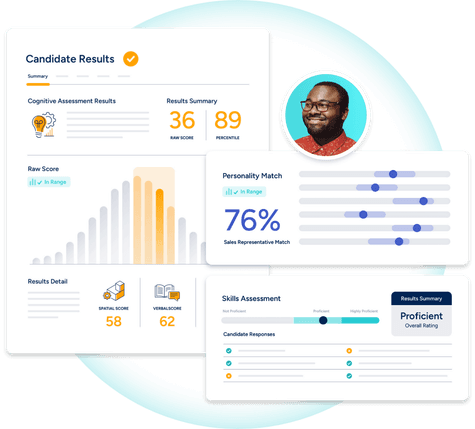
Get an exclusive look at live product demos to implement that playbook in your hiring today, including how to use realistic job previews and simulations to illustrate “a day in the life,” and apply science-based assessments to measure cognitive ability, skills, personality, emotional intelligence, and integrity.
We also explore how structured interviews, AI-supported scoring, and automated shortlisting can help you move from gut feel to consistent, data-driven decisions, without losing the human touch.
Plus, we speak with a Criteria customer, Year Up United CIO, Gary Flowers, to learn how Year Up United focuses on skills-based hiring and assessments in 2026.
By watching, you'll learn how to:
- Replace resumes with talent signals that actually predict performance
- Screen high-volume applicants faster without sacrificing candidate quality
- Use AI in hiring in a way you can explain, defend, and scale
Who Should Watch:
HR leaders, talent acquisition professionals, recruiters, and hiring managers who want to ensure their hiring processes remain fair, reliable, and future-proof in the age of AI.

Meet Your Hosts
Rachel Zerilla
Director of Product Marketing, Criteria
Rachel is the Director of Product Marketing at Criteria, where she combines her 15+ years of marketing experience and creative spark to create product magic.

Jam Khan
Chief Marketing Officer, Criteria
Jam brings extensive experience across the SaaS landscape, having held roles at ZoomInfo, 6sense, Seismic, Thales, and SafeNet before joining Criteria as our Chief Marketing Officer.

Gary Flowers
CIO of Transformation and Technology, Year Up United
Gary is an award-winning executive and sought-after speaker who leads enterprise-wide digital transformation and leverages innovation to expand career access for young adults and redefine the future of the AI enabled workforce development.